"Ethos is easily gamed" is something we hear all the time.
We constantly improve and adapt the algorithm to combat this. Most don't know the depth at which we already do. Here's how Ethos is solving this better than you think it might be.
The Trifecta of Building Credibility
There are three things you need to build credibility on Ethos:
- Time — Vouches mature over 180 days. There is no way to speed this up.
- Social capital — Someone must back you. You need humans who are willing to stake their reputation on yours.
- Financial capital — Vouching carries opportunity cost and slashing risk. Money talks.
Credibility is not "up only" though. Creating it for others must carry RISK.
Your score can go down through slashing, downvotes, and negative reviews. You can lose money through markets and financial slashing. Every action on Ethos creates risk—even writing a positive review.
20 Ways We Prevent Gaming
1. Ethos is still invite-only
Unlike the rest of crypto where you can spin up an infinite number of wallets, there are a limited number of Ethos invites available. Securing an invite usually requires you have a high score.
This makes Ethos incredibly sybil resistant.
2. Ethos has an invitation bond
For 180 days, your score and your inviter's score are bound.
Invite someone whose score tanks because they turned out to be a sybil, were writing AI slop reviews, or got caught in vouch4vouch rings? You will LOSE score if their score goes down.
3. That invitation bond carries slashing risk
EIP-10 introduced a change that holds the inviter liable for inviting someone who gets slashed.
Invite a sybil who gets slashed? You're held accountable. Invite a bad actor who gets slashed? That's your score on the line.
4. All reviews consider score difference
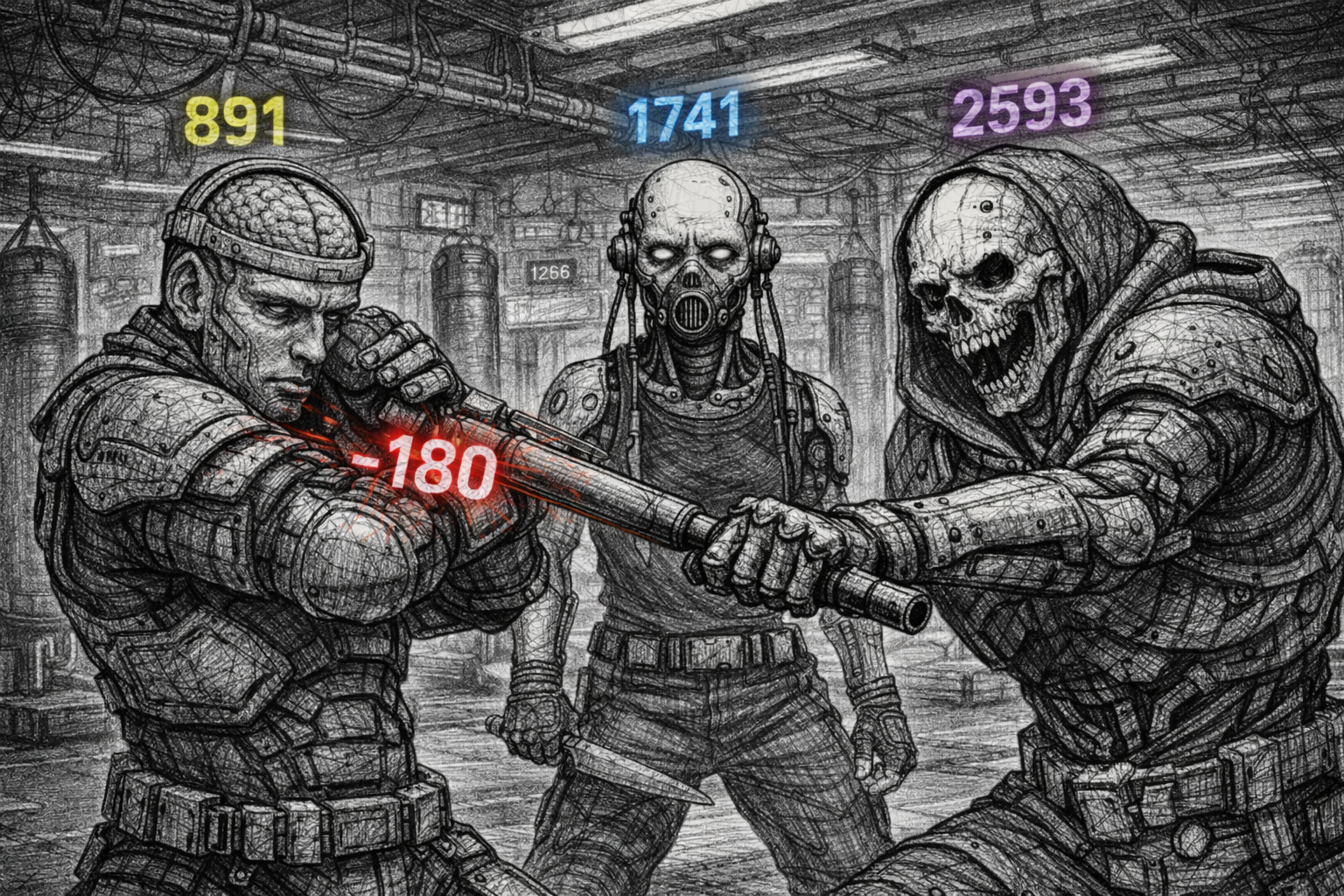
Like ELO, a user who is 1200 reviewing someone who is 1250 has no impact to the target. A user who is 2400 reviewing someone who is 1250 has significant impact to the target.
This properly puts power into reputable hands.
5. "Circle jerk" reviews have extremely limited impact
Once a user has written reciprocated 10 reviews, subsequent reviews have NO impact.
This hinders the effectiveness of Discord and Telegram groups who exchange reviews, and ensures global consensus takes precedence over local.
6. Impact for reviews depend on consensus
If a user writes a review and receives lots of downvotes, the impact of the review can be reduced to 0.
This empowers the community to moderate and ensure AI slop or abuse does not positively impact the intended target.
7. Significant downvotes against a user's reviews can cause a loss of score
When users write reviews, if they receive mostly downvotes for their reviews, they can lose credibility score for being a bad contributor.
8. All votes are based on reputation score, including 0 impact for <1400
This ensures that consensus for #6 and #7 above are accurate and cannot be spoofed by new participants, again putting the power into reputable user's hands for moderation.
9. Daily tasks help us crowd source input for reviews, decentralizing moderation
We use daily tasks to ask users to upvote, downvote, or mark users as AI slop.
This helps the community self-police and moderate spam, slop, and abuse. It's like captcha... sorta.
10. Positive reviews left for a target can be "marked as spam"
EIP-6 introduced this change and allows users to mark positive reviews on their own profile as "spam."
Multiple violations of this and the author can lose significant score.
11. Limited impact of reviews
ONLY having reviews on a profile limits the amount of credibility to be gained.
It is incredibly difficult to get to 1600 with reviews alone—an important protection against "free score" from reviews.
12. Supporting users who get slashed carry a Misplaced Endorsement penalty
EIP 3.1 introduced this—vouching or reviewing users who get slashed can lose you score.
This can quickly negatively impact vouch and review farms, removing thousands of credibility score from the system.
13. Wallet quality is durable and difficult to spoof
With EIP-11, we enabled users to gain up to 75 credibility score through the quality of their connected wallets.
Inflating this metric is incredibly difficult and costly to do. Your wallet is not as impressive as you think—minted punks and participated in the ETH ICO? +75. Funded last week? +4.
14. Economic security is incredibly important to prevent abuse
Vouching requires capital, opportunity cost, and fees.
This is the most fundamental defense for Ethos, as reviews are otherwise "free" and easy to abuse.
Oh, and you can't vouch for yourself.
15. Vouching is not a whales game
Vouching impact is on a sigmoid curve, and a 100e vouch is much closer to 1.25x the impact of a 1e vouch than 100x.
You need multiple vouches from multiple sources to max the credibility score from vouches.
16. Number of vouchers has limited impact with many small vouches
EIP-13 changed this; having lots of vouchers is important, but when the ratio of vouched eth to vouchers is low, we apply a penalty to its impact.
This hinders v4v farms who participate in low stakes vouching.
17. Handicap for low influence accounts
Using our own scoring of influence factor for connected social accounts, we measure the difference between perceived influence and credibility score.
EIP-12 introduces a handicap when this delta is sufficiently large. Users with high reputation and low influence are handicapped on Ethos.
18. Ethos markets creates profit opportunity to find true "reputation"
For users who have their own markets, their reputation markets directly impacts their score.
Someone can buy "distrust" to potentially profit from, and negatively impact your score. Ethos.markets is the purest form of reputation.
19. Slashing for unethical behavior
Also fundamental to Ethos, any user can be slashed a part of their Ethos score if someone else believes they have stepped out of line, and consensus agrees.
Contributors have used this to call out people blatantly abusing Ethos.
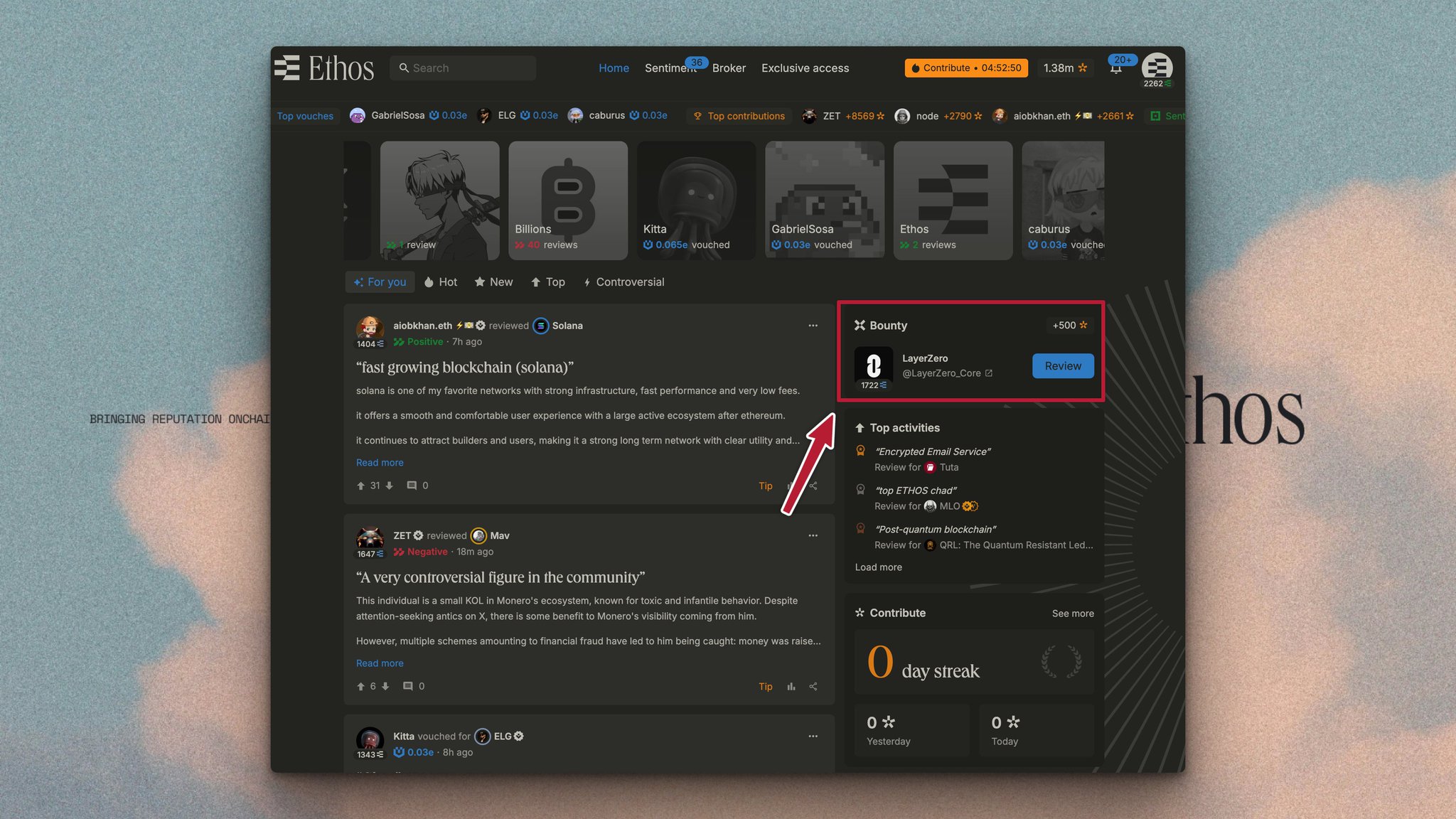
20. Bounties for Abusers
We've created bounties for any user to submit to help us identify:
- Sybil accounts
- Abuse
When all else fails, we use incentives (USDC) to help call out bad behavior. These last two are the last line of defense, closest to "community moderation."
The Living Algorithm
Each of these mechanics work in unison, limiting gamification and ensuring the scores are as accurate as possible.
Whether you're deliberately abusing the protocol by vouching for people you don't know or writing AI slop on 100 profiles, we have defense against each action.
It's worth understanding clearly that there will ALWAYS be gamification and abuse of protocols. Abuse happens everywhere, but Ethos has a vested interest in preventing as much of it as possible.
We learn the most by people TRYING to abuse Ethos... and have!
So next time you look at Ethos and say "Yea but it's gamed, and people circle jerk in groups to boost their score"—come back, read this. Understand our intent. Understand that we KNOW we must limit the problem. Observe our progress against it.
It is a living algorithm.
It will be our duty to consistently change it. It is our job to ensure that you trust us to do that job thoroughly and well.
Just remember: the optimal amount of fraud is non-zero. We will never fully solve this—we will only continue to adapt and limit it.
Thanks for reading.