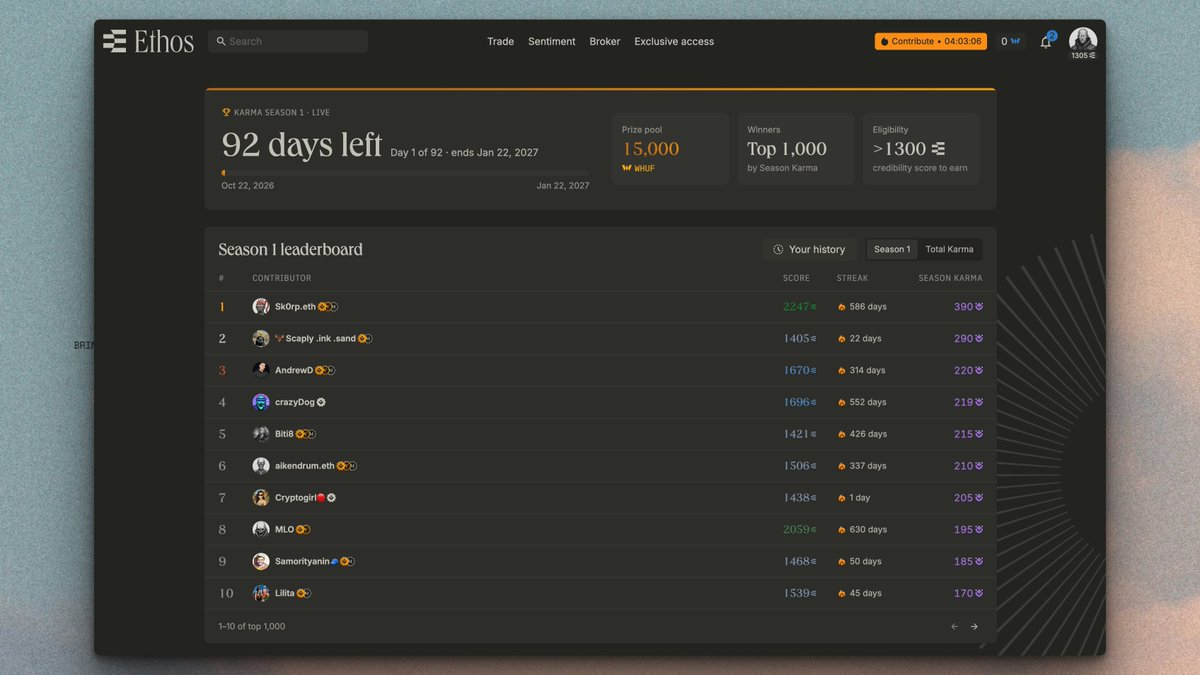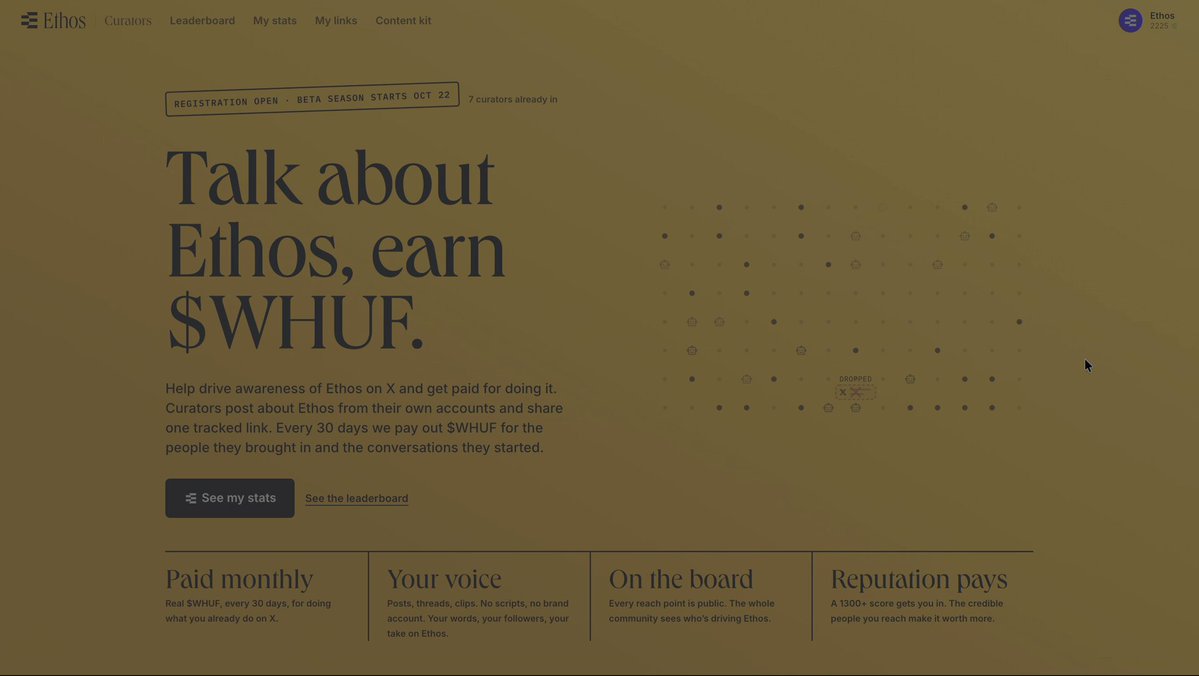
Over the next few months, you’re going to see Ethos ship more products than we ever have. Some will hit. Some won’t. That IS the strategy. And it will help us win.
Recently I wrote about how our strategy and focus has changed since TGE. Instead of depending on integrators to decide to bring Ethos scores into their products, we’re now building the experiences and products where we think reputation belongs at the center. Where we think reputation makes existing products significantly better.
When Ben and I first started building Ethos, we had an idea we called internally the “Hydra Head Approach.” Even back then, we felt we needed to show the world the use cases where Ethos made the most sense, as opposed to waiting for others. It wasn’t quite our priority yet, though... we were still getting the scores stable and the platform built out. The focus was on the platform. But this strategy something we always knew we wanted to align around.
Why hydra heads? It's pretty simple - cut one off and two grow back. Every head - or product experience - we kill teaches us how to grow a stronger one. The approach results in creating multiple products as opposed to just one.
You can see it in what we built thus far. Broker, an OTC trading desk for basically anything, backed by reputation, was one of those heads. It was a quick and easy project, and the people who use it today love it, but the market for it ultimately hasn’t been as large as we’d hoped.
Then we worked on others.. speculation (markets/trade), listings and sentiment (project analysis backed by credibility), and human verification (where reputation was required to attest that others are human). Each was a different use case built on top of the Ethos score and protocol, and each was a shot on goal, knowing full well some would work and some wouldn’t.
And to be fair, some didn’t. Today we’re on the verge of retiring listings/sentiment. It hasn’t been as useful a signal or value as we thought, and honestly, we never gave it real distribution. That’s a mistake we won’t repeat.
That’s not the strategy failing. That IS the strategy.

In February this year, our focus shifted. The protocol was mature, and it ready for a native token. We wanted alignment with token holders, we wanted to reward people for their contributions, we wanted to tie the core action of vouching to a native token, and we wanted to solidify Ethos as THE reputation protocol. It has largely consumed our focus.
Now our product has matured, and models like Fable have changed how fast we can build new hydra heads... We have far more capacity to ship than we did even six months ago, with the exact same team. Perfect timing.
Years ago, as a Director of Product, I taught early career product managers on my team the fundamentals of building great software products. My advice always came back to one mantra: learn by shipping. Twiddling your thumbs over “will someone like it?” or “will the market appreciate this?” is wasted time. Ship it, and the market tells you what matters. This is our mantra at Ethos, too.
Now in 2026, a small team can ship what used to take a whole department a significant of coordination and operational effort. 10 week projects turn into 2. With Ethos as a mature platform underneath, we can build a new product, ship it, learn from it, double down on what works, and keep solving meaningful problems, with every person on the team carrying far more leverage than before.
So over the next few months, you're going to see us ship more hydra heads than ever, aligning with our strategy of going to where our user is and solving direct problems with them.
Each one puts a new use case to the test:
- What if reputation were at the center of every trading decision?
- What if teams could target credible reach, and actually measure it?
- What if access to product or their functionality were gated/filtered by being human.. Or a reputable human?
Some hydra heads will still be big efforts that take time to build. Some will be built by one person in a few days, which is exactly why we can afford to take so many shots. Not every hydra head is our best bet at capturing a market, and shipping X before Y doesn’t mean we’ve stopped caring about Y.

But every head is a commitment to learning by shipping. In crypto we live on the edge of technology, and the only way forward is to iterate fast, throw away what doesn’t work, and triple down on what does. This also works exceptionally well in crypto where we all have shiny object syndrome when we speculate :)
And now with a token, every hydra head puts $WHUF at the center. Some will be built for volume and burning $WHUF. Others will put vouched $WHUF and score at the core of the product. Having a token with multiple mechanics gives us an incredible amount of flexibility, and gives us a clear goal of what each product should ultimately result in.
A cautionary note: we can ship what feels like an infinite supply of hydra heads, but shipping isn’t winning. Now anyone can ship. Distribution is what wins. These aren’t experiments we’ll quietly drop after 30 days. Every head gets real marketing and an honest shot. We’ll look for early signs of product-market fit, then decide: grow it, change it, or cut it and carry what we learned into the next one.
The companies that win this era will be the ones that ship, learn and kill fastest.. at a velocity we have never seen in software development before. Anthropic is the clearest example: they spin up new products seemingly at a whim, because they’re at the frontier and know better than anyone how to build with AI. That’s the game we’re playing too.
On the last post I got some feedback that "You didn't really say anything about what you were actually going to do!" - and that's fair feedback. In crypto we often expect to know exactly what's getting built next, so we can make our own speculative decisions.
I spent well over a decade building products in web2, and great products always start with clear product strategy. Having a crisp definition for what you are trying to do, how you will do it, and how you will WIN, even while ambiguous, is the most important foundation for any team. And when I think about how we report that back to "stake holders" like yourself, that comes in the form of sharing the strategy in this medium.
We have never been a team that shares our roadmap and what exactly is next, but as you see what we DO ship in the next weeks, months.. you can think back to this as a means of understanding how each piece fits into that strategy.
Serpin (@serpinxbt) is a co-founder of Ethos. This article first appeared on X.