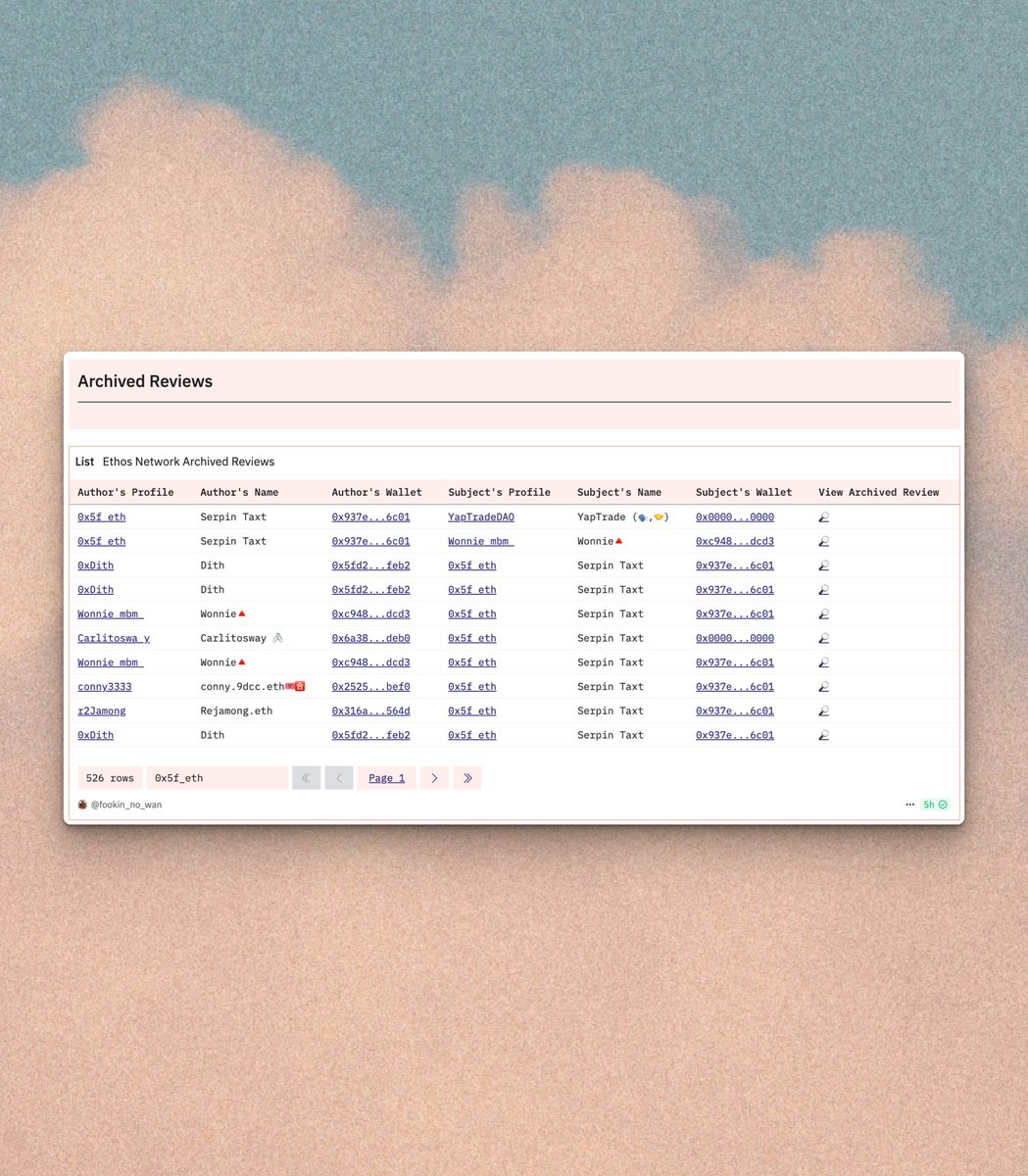
On March 24, 2025, Ethos reminded its users that everything they do on the network is onchain, and pointed to a new example of what that means in practice: a community-built Dune query created by @Fookin_No_Wan. The query let anyone see deleted reviews and who voted on what, with search.
For anyone writing reviews or voting on Ethos, the takeaway was simple: deleting something doesn’t make it disappear, and votes are a matter of public record.
What the query showed
According to Ethos, the Dune query made two kinds of data visible:
- Archived reviews: reviews that had been deleted
- Voting activity: who voted on what
Both were searchable, so a person could look up the activity they cared about rather than scrolling through raw records.
Why deleted reviews are still visible
Because that activity is recorded onchain, a review that someone deletes on Ethos remains part of the record as an archived review. The Dune query gave people an easier way to find those entries.
That matters for a reputation system. If reviews could be quietly erased, a person’s history would only show what they chose to keep. With archived reviews still visible, the full record stays available to anyone who wants to check it.
Making votes more visible in the product
In a follow-up post the same day, Ethos said it was working on making upvotes, downvotes and slash voting much more visible inside the Ethos product itself. The posts don’t record when that work was completed.
Ethos also welcomed community efforts like this one. The team said it loved to see people building Dune queries to help others, and noted that they are a good way to:
- Export data from Ethos
- Run your own analysis on that data
Because the underlying records are onchain, tools like this don’t depend on Ethos building every view itself. Anyone with the interest and skills can query the data and share what they find, as @Fookin_No_Wan did.
This thread first appeared on X.