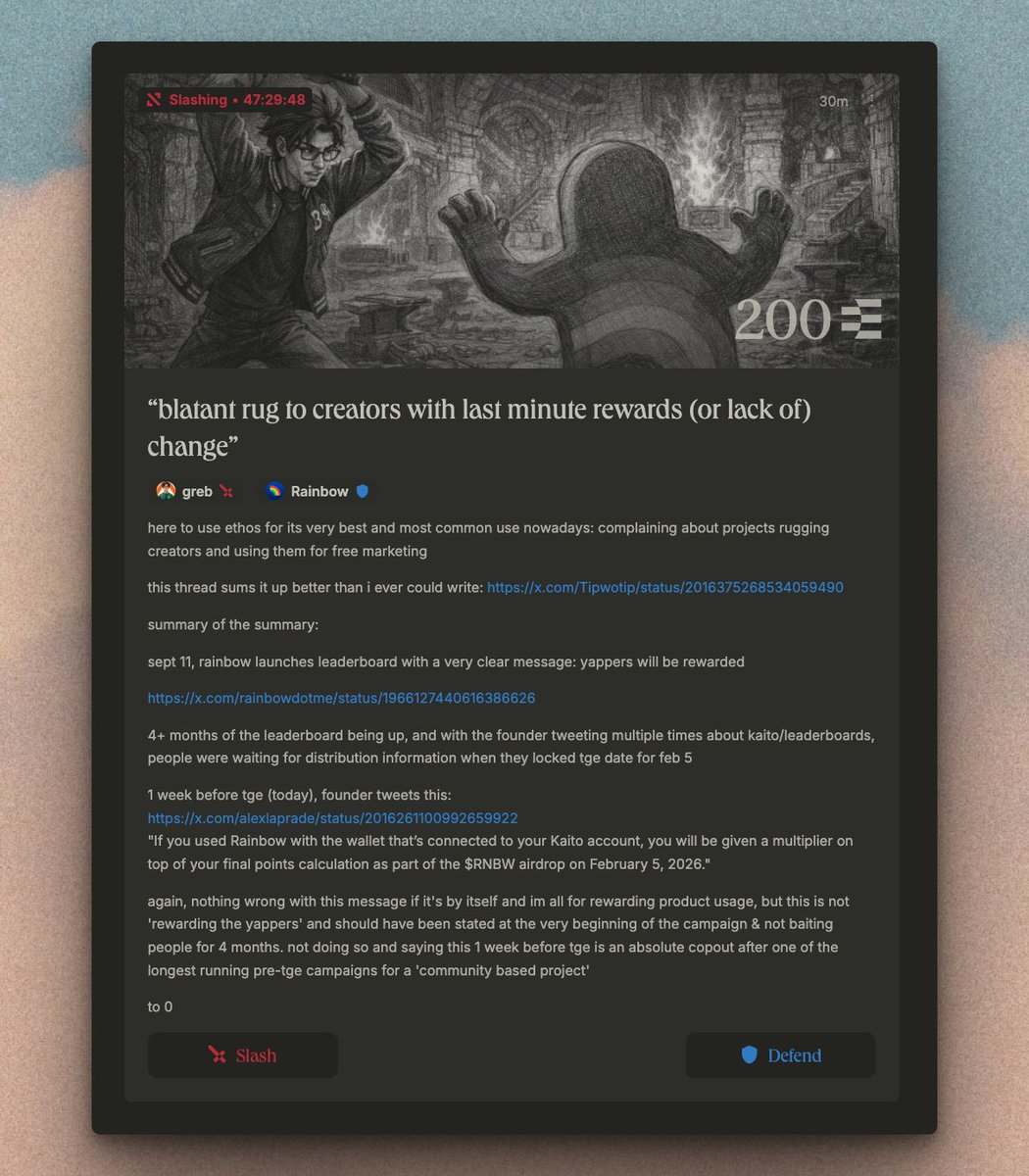
On January 28, 2026, @grebby opened a slash on Ethos against @rainbowdotme, with @alexlaprade also named, for 200 credibility score. On January 30, 2026, Ethos reported the result in one word: the slash failed.
The case shows how a slash puts a public accusation in front of the community, and how the community can decline to back it.
What the slash claimed
@grebby summed up the case against Rainbow in a single line:
“blatant rug to creators with last minute rewards (or lack of) change”
In short, the complaint was about how creators were treated. According to @grebby, Rainbow changed its creator rewards at the last minute, or left creators without the rewards they expected. @grebby called that a “rug.”
The source behind the accusation
@grebby didn’t make the case on their own word alone. They cited an article published on X by @Tipwotip as their source of information: x.com/Tipwotip/status/2016375268534059490.
The Ethos posts don’t summarize what that article says beyond linking to it, so readers who want the full background on the rewards change would need to go to @Tipwotip’s article directly.
Putting it to the community
A slash is a direct challenge to an account’s credibility score on Ethos. Here, @grebby asked for Rainbow to lose 200 points.
When Ethos shared the slash on January 28, it posed the question to its followers: “What do you think anon?”
The outcome
On January 30, 2026, Ethos posted that the slash had failed. The posts don’t give vote totals or explain why it didn’t pass.
A failed slash doesn’t settle every question about the underlying complaint. What it does show is that the accusation, and the source cited to support it, weren’t enough on this occasion to cost Rainbow the 200 points @grebby asked for.
This story first appeared on X.